2024-02-09
Facts onZimbabwe safaris in 2024/2025
Facts on Zimbabwe safaris in 2024/2025
Tour Operator: Dav Safaris Website: www.davsafaris.com Email: info@davsafaris.com
Tel: +256701412430 | +256757795781
Facts on Zimbabwe safaris in 2024/2025
For those planning on a Zimbabwe wildlife safari or any other safaris in 2024, a comprehensive understanding of this captivating safari destination is paramount. Zimbabwe is located in southern Africa, and is embraced by Zambia to the northwest, Mozambique to the east and south, South Africa to the south, and Botswana to the southwest. Geographically, its coordinates span from approximately 20.0°S to 30.0°S latitude and 25.0°E to 33.0°E longitude, boasting a subtropical climate marked by distinct dry and wet seasons.
Annual temperatures oscillate between 30°C (86°F) in the summertime, from October to March, and 15°C (59°F) in the winter, from May to August. Rainfall varies from 400 millimeters to 900 millimeters annually, with the eastern highlands receiving higher precipitation.
Zimbabwe's diverse terrain, comprising savannas, woodlands, and mountains, fosters ecological richness and agricultural prospects, though it grapples with periodic droughts and deforestation challenges.
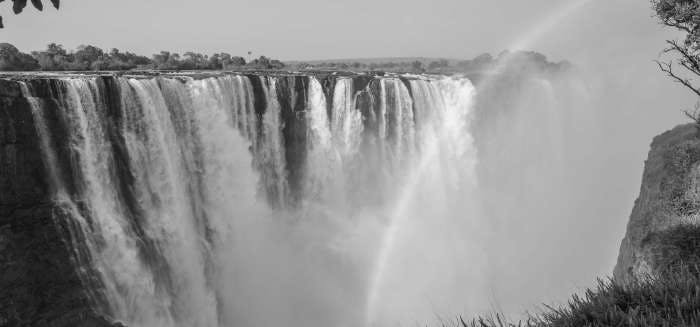
Victoria Falls, a majestic natural marvel situated in the Matabeleland North province, stands as a testament to Zimbabwe's cultural heritage and geographical splendor, boasting coordinates of approximately 17.9316° S latitude and 25.8253° E longitude. Elevation-wise, it rests around 915 meters (3,000 feet) above sea level, experiencing a subtropical climate characterized by distinct wet and dry seasons. The dry spell spans from May to October, with temperatures ranging from 25°C to 35°C (77°F to 95°F), while the wet season, from November to April, ushers in higher rainfall, fostering a verdant landscape.
Travelers on a Zimbabwe wildlife safari or any of the other safaris must secure a tourist visa upon entry and ensure the validity of their passports to evade legal ramifications.
Tipping etiquette suggests modest gratuities for guides and rangers, whereas internet accessibility is limited, especially in remote safari settings.
While cellular communication might falter in these areas, the nation's electricity outlets cater to Type G British style sockets and Type D Indian Style plugs, necessitating power adapters for compatibility.
Sanitation facilities vary from western-style toilets in upscale accommodations to latrines in remote locales, and potable water is predominantly sourced from bottled or filtered sources due to safety concerns.
Financial transactions predominantly rely on cash, with ATMs available in urban centers for convenience.
Language diversity is evident, with Shona, Ndebele, and English serving as primary tongues amidst a tapestry of minority languages.
Zimbabwe's population stands at approximately 14.5 million, while its wildlife repertoire comprises 350 mammal species, over 500 avian species, and 131 fish species, beckoning safari enthusiasts year-round.
Notably, the prime safari season spans from June to September, coinciding with the dry spell when wildlife congregates around watering holes. From the majestic Hwange to the serene Lower Zambezi and the captivating Victoria Falls region, Zimbabwe's safari offerings encompass an array of flora and fauna, with costs varying from $900 for a 3-day excursion to $8000 for a 10-day odyssey.
Alongside renowned lodges and tented camps like Bomani Tented Lodge and Victoria Falls Safari Lodge, Zimbabwe's regional highlights, including Hwange National Park and Mana Pools National Park, showcase the nation's rich biodiversity.
Accessing Victoria Falls from Harare, Zimbabwe's capital, entails an approximately 860-kilometer (534-mile) journey by road or a 1.5-2-hour domestic flight, epitomizing the country's accessibility and allure for intrepid travelers.
So hurry up and book with Dav Safaris to enjoy an exciting Zimbabwe wildlife safari or any of the other safaris including a visit to the Victoria Falls.